Pre-K program
A welcoming Pre-K program for children ready for guided early learning.
A welcoming Pre-K program for children ready for guided early learning.
When your child is getting ready for school, the day can feel bigger than it should. You may be looking for a Pre-K program that gives structure, warmth, and steady routines without making little learners feel rushed or overwhelmed.
Pea Wees In A Pod serves families with a Pre-K program built for early growth, social practice, and everyday confidence. If you are trying to find a place where your child can learn through play, listening, movement, and hands-on activities, we can help you take the next step with clarity.
A good Pre-K experience should meet children where they are. Some children arrive ready to talk through every part of the day. Others need time to warm up, share space, or try new routines at their own pace. Our Pre-K program supports those early transitions with age-appropriate structure and room for personal growth.
Families often start searching when they notice a child is ready for more than casual play. Maybe your child asks constant questions, wants more chances to color, sort, count, or listen to stories, or seems ready for group time. A Pre-K setting gives those early skills a place to grow through everyday practice.
Young children do well when the day has a rhythm they can recognize. In our Pre-K program, the routine supports learning while helping children feel settled. The goal is not to rush through tasks. It is to create a steady flow of activity, movement, and rest that helps children stay engaged.
At Pea Wees In A Pod, the structure of the day helps children move from one activity to the next with less stress. That includes guided learning moments, open-ended play, meal or snack times when scheduled, and opportunities to practice transitions. These small moments matter because they help children build confidence in a group setting.
Children start the day by settling in, reconnecting, and moving into the routine with support.
Activities may include letters, numbers, colors, shapes, stories, songs, or simple problem-solving.
Children need time to move, explore, and use their imagination as part of the learning day.
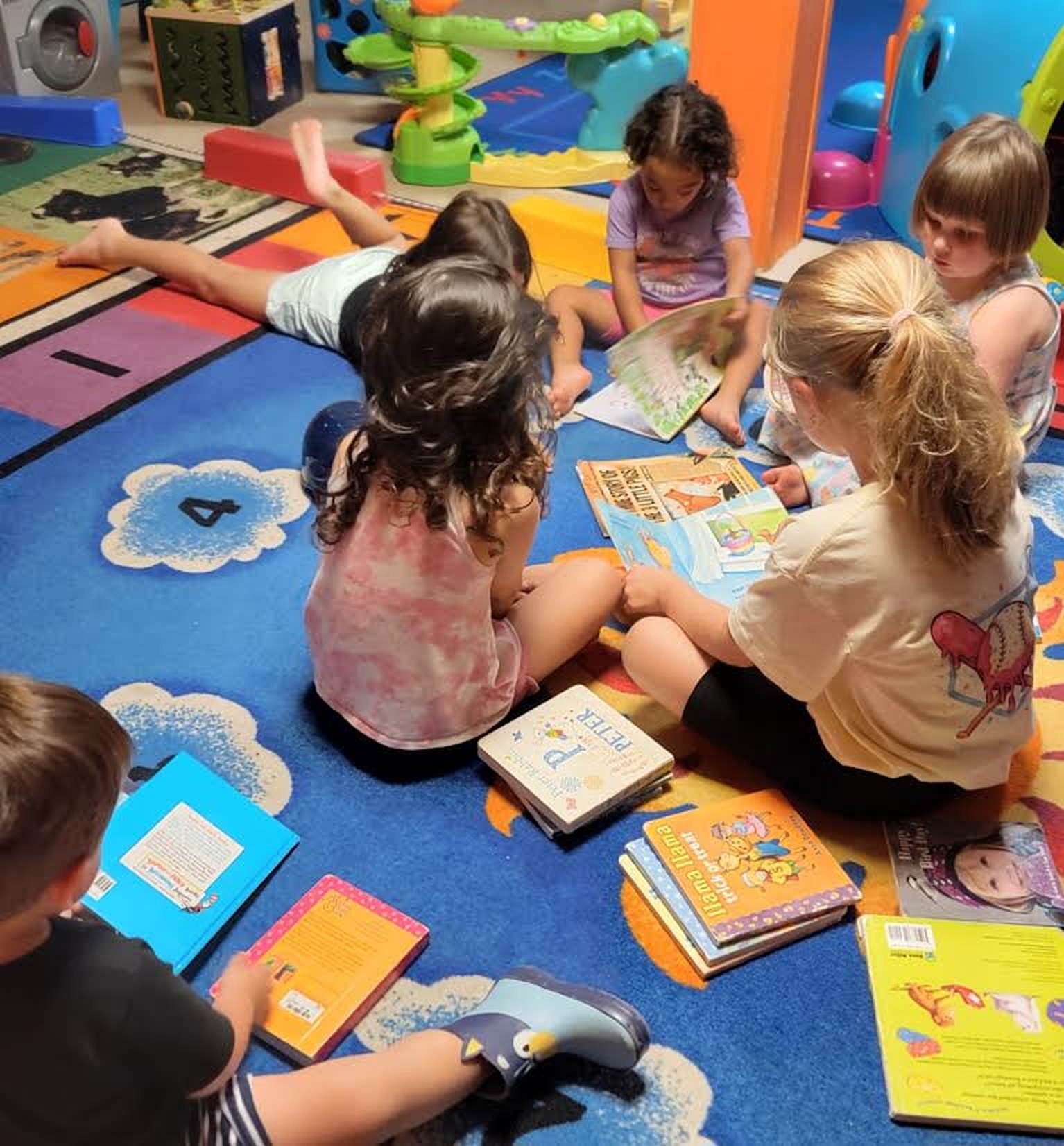
Circle time, listening activities, and shared play help children learn how to participate with others.
Caregivers help children move between activities with clear expectations and calm direction.
Pre-K is about more than letters and numbers. It is also a time for children to build the habits that help them thrive once school becomes part of daily life. Our program supports early learning through repeated practice, encouragement, and age-appropriate challenges.
Children often develop skills during regular routines rather than from one large lesson. That is why our approach includes both guided activity and everyday interaction. Over time, children begin to build comfort with structure, conversation, listening, and group participation.
One of the biggest changes children make during Pre-K is learning how to be part of a group. That does not happen all at once. It happens through repetition, support, and lots of small successes. A child may start by observing, then join a game, then speak up during group time, then follow a routine with less help.
Pea Wees In A Pod gives children the space to practice those moments without pressure. Some children are naturally outgoing. Others need more time. Both can benefit from a setting that encourages kindness, patience, and steady participation.
Children learn a great deal through play, especially at Pre-K age. Play helps them test ideas, build language, solve problems, and practice focus. It also keeps learning active and meaningful, which is important for young children who learn best by doing.
Our Pre-K program uses play as a learning tool, not a break from learning. A child building with blocks is practicing balance and planning. A child pretending to cook is using language, memory, and imagination. A child drawing shapes is strengthening hand control and visual skills. These moments add up.
Children notice patterns, compare objects, and strengthen early math thinking.
Books, songs, and pretend scenes help build vocabulary and comprehension.
Art activities encourage focus, expression, and fine motor development.
Blocks and similar materials help children learn planning, balance, and spatial awareness.
Families often need a Pre-K program that fits real routines. That may mean a dependable place for weekday care, a clear structure for drop-off and pickup, or a setting that makes the morning easier for everyone. A thoughtful Pre-K option can reduce stress for both children and adults.
Pea Wees In A Pod offers weekday care from 6:00 AM to 6:00 PM, Monday through Friday. That schedule supports families who need coverage across the workday while keeping children in a consistent learning environment. It also helps children settle into a regular routine, which can make each day feel more predictable.
If you are balancing work, appointments, or changing schedules, a steady Pre-K program can make a real difference. Instead of wondering whether your child will have enough structure, you can rely on a place that keeps the day organized and child-focused.
Starting Pre-K is a big step, and it helps to have a simple process. At Pea Wees In A Pod, we aim to make that first conversation easy. You can ask about the program, the day’s flow, what children do during learning time, and how we support transitions for new families.
When you reach out, it helps to think about your child’s current routine, comfort level with group settings, and any concerns you want addressed early. That gives us a better sense of how to support your family from the start.
Pre-K is generally for children who are ready for more structured learning than toddler care, but still benefit from play-based teaching and close adult support.
Pre-K usually places more focus on school readiness skills like listening, routines, early literacy, and group participation, while still using play to teach.
Children may take part in stories, songs, learning activities, creative projects, movement time, group practice, and guided play that supports early development.
Shy children are given time to settle in, observe, and join activities at a pace that feels manageable. Gentle encouragement and routine help build comfort.
Yes. A strong Pre-K program helps children practice listening, following directions, sharing space, and handling structured activities, which are useful for kindergarten.
Families can reach out to Pea Wees In A Pod to ask about the Pre-K program, weekday hours, and the best way to begin enrollment planning for their child.
If you are looking for a Pre-K program that supports early learning with structure and care, Pea Wees In A Pod is ready to help you explore the right fit. A good start can shape how your child feels about school, learning, and group time.
To ask questions or learn more about availability, contact us at kerriannperone@gmail.com or call +18456623115. We are here to help your family take the next step with confidence.
Share a little about your child care needs and we’ll help you find the right fit for your schedule and your child’s stage of development.